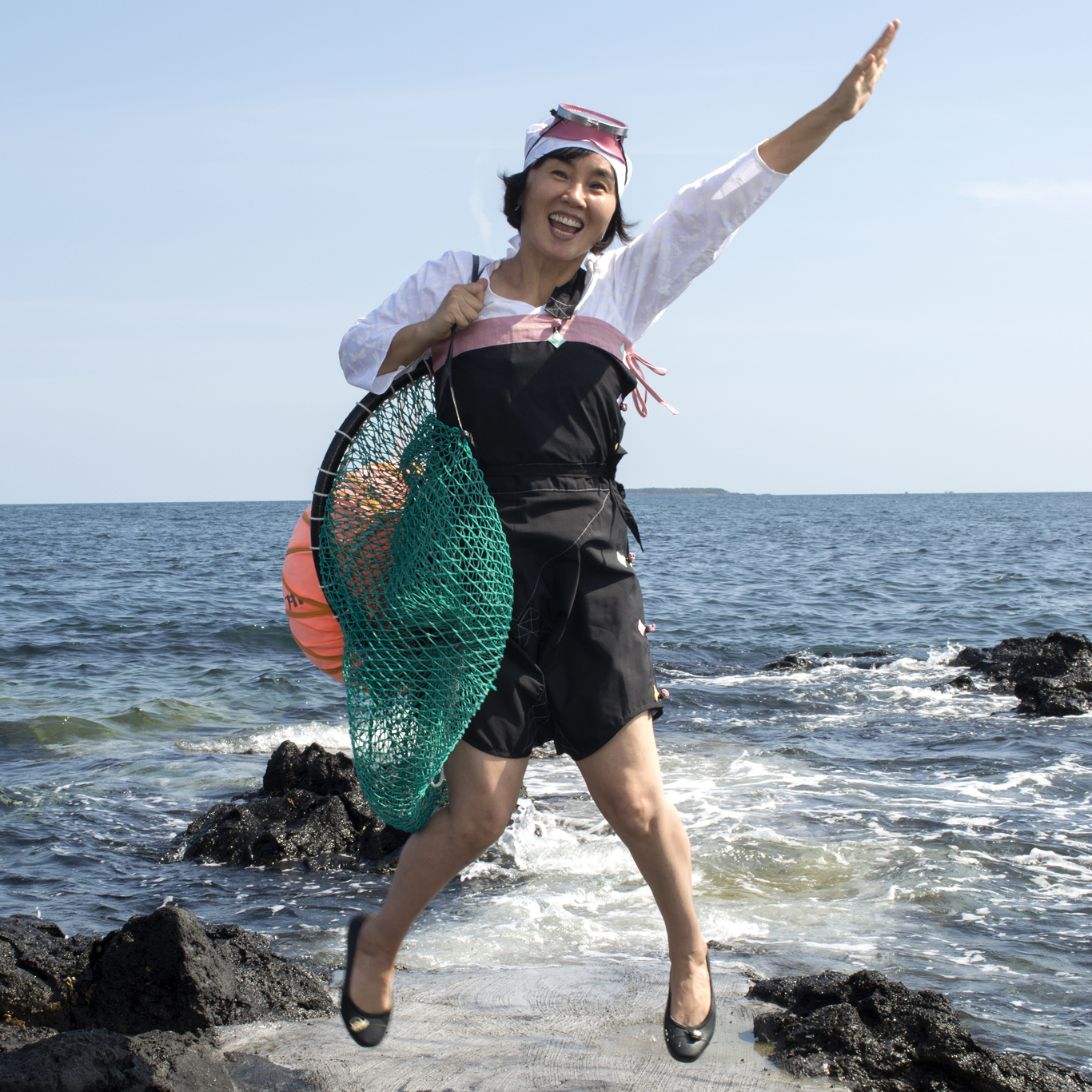
An Introduction to Haenyeo
1. What Is a Haenyeo?
Haenyeo are women divers from Jeju Island, South Korea.
They enter the sea without oxygen tanks and dive on a single breath to harvest seafood.
From the depths of the ocean,
they gather abalone, sea snails, seaweed, and other marine resources,
living in rhythm with nature rather than against it.
Haenyeo diving is not simply labor.
It is a way of life built on experience, intuition, and deep respect for the sea.
Today, haenyeo represent
the history of Jeju,
the strength of women’s labor,
and a rare example of humans living in balance with the ocean.
2. A Day in the Life of a Haenyeo
A haenyeo’s day begins by reading the sea.
In the morning,
they observe the wind,
the waves,
and the color of the water.
“Will the sea allow us today?”
Only when the sea allows it
do they enter the water.
After diving,
they rinse their bodies,
sit together,
and drink warm water while catching their breath.
A haenyeo’s life is not fast.
But it always exists close to the edge between life and death.
That is why
they remain humble
in front of the sea.
3. The Tools of a Haenyeo
Haenyeo dive with simple tools refined over generations.
● Tewak
A floating buoy used to rest between dives
and to carry harvested seafood.
● Mang-sari
A mesh net attached to the tewak,
used to store abalone, sea snails, and seaweed.
● Goggles
A basic diving mask,
yet the haenyeo’s eyes and lifeline underwater.
● Lead Belt
A weighted belt worn to help the body descend into the sea.
Haenyeo tools are never elaborate.
They exist only for survival.
4. The Haenyeo’s Breath: “Sumbisori”
When haenyeo surface from a dive,
they release a sharp, whistling breath.
This sound is called sumbisori.
It is more than a breath.
It helps restore oxygen
and prepares the body for the next dive.
It is also a signal—
a way for haenyeo to confirm one another’s safety.
Because of this,
the sea of haenyeo is always filled with breath.
5. Why Haenyeo Are Special
Haenyeo do not conquer the sea.
They take only what the sea allows.
Small abalone are left behind.
During spawning seasons, diving stops.
This way of life represents
one of the earliest forms of sustainable fishing
and a deep wisdom of coexistence with nature.
In recognition of this value,
Jeju Haenyeo Culture
was inscribed in 2016
as a UNESCO Intangible Cultural Heritage of Humanity.
6.One Thing to Know Before Understanding Haenyeo
Haenyeo are not a profession of the past.
They still enter the sea today.
This is a living culture.
This archive exists
not to display haenyeo as objects of curiosity,
but to understand them as lives worthy of respect.
📌 Archive Use Guidelines
This archive is designed to help visitors understand haenyeo culture easily.
All materials are open for reading and learning.
Please credit the source when quoting or using this content.
Deeper materials are available in higher levels of the archive.



An Introduction to Haenyeo
1. What Is a Haenyeo?
Haenyeo are women divers from Jeju Island, South Korea.
They enter the sea without oxygen tanks and dive on a single breath to harvest seafood.
From the depths of the ocean,
they gather abalone, sea snails, seaweed, and other marine resources,
living in rhythm with nature rather than against it.
Haenyeo diving is not simply labor.
It is a way of life built on experience, intuition, and deep respect for the sea.
Today, haenyeo represent
the history of Jeju,
the strength of women’s labor,
and a rare example of humans living in balance with the ocean.
2. A Day in the Life of a Haenyeo
A haenyeo’s day begins by reading the sea.
In the morning,
they observe the wind,
the waves,
and the color of the water.
“Will the sea allow us today?”
Only when the sea allows it
do they enter the water.
After diving,
they rinse their bodies,
sit together,
and drink warm water while catching their breath.
A haenyeo’s life is not fast.
But it always exists close to the edge between life and death.
That is why
they remain humble
in front of the sea.
3. The Tools of a Haenyeo
Haenyeo dive with simple tools refined over generations.
● Tewak
A floating buoy used to rest between dives
and to carry harvested seafood.
● Mang-sari
A mesh net attached to the tewak,
used to store abalone, sea snails, and seaweed.
● Goggles
A basic diving mask,
yet the haenyeo’s eyes and lifeline underwater.
● Lead Belt
A weighted belt worn to help the body descend into the sea.
Haenyeo tools are never elaborate.
They exist only for survival.
4. The Haenyeo’s Breath: “Sumbisori”
When haenyeo surface from a dive,
they release a sharp, whistling breath.
This sound is called sumbisori.
It is more than a breath.
It helps restore oxygen
and prepares the body for the next dive.
It is also a signal—
a way for haenyeo to confirm one another’s safety.
Because of this,
the sea of haenyeo is always filled with breath.
5. Why Haenyeo Are Special
Haenyeo do not conquer the sea.
They take only what the sea allows.
Small abalone are left behind.
During spawning seasons, diving stops.
This way of life represents
one of the earliest forms of sustainable fishing
and a deep wisdom of coexistence with nature.
In recognition of this value,
Jeju Haenyeo Culture
was inscribed in 2016
as a UNESCO Intangible Cultural Heritage of Humanity.
6.One Thing to Know Before Understanding Haenyeo
Haenyeo are not a profession of the past.
They still enter the sea today.
This is a living culture.
This archive exists
not to display haenyeo as objects of curiosity,
but to understand them as lives worthy of respect.
📌 Archive Use Guidelines
This archive is designed to help visitors understand haenyeo culture easily.
All materials are open for reading and learning.
Please credit the source when quoting or using this content.
Deeper materials are available in higher levels of the archive.